BIOSTEC Conference Co-Chairs

|
Ana Fred
Instituto de Telecomunicações and Instituto Superior Técnico (University of Lisbon)
Portugal
|
Short Bio
Ana Fred received the M.S. and Ph.D. degrees in Electrical and Computer Engineering, in 1989 and 1994, respectively, both from Instituto Superior Técnico (IST), Technical University of Lisbon, Portugal. She is a Faculty Member of IST since 1986, where she has been a professor with the Department of Electrical and Computer Engineering, and more recently with the Department of Biomedical Engineering. She is a researcher at the Pattern and Image Analysis Group of the Instituto de Telecomunicações. Her main research areas are on pattern recognition, both structural and statistical approaches, with application to data
mining, learning systems, behavioral biometrics, and biomedical applications. She has done pioneering work on clustering, namely on cluster ensemble approaches. Recent work on biosensors hardware (including BITalino – and ECG-based biometrics (Vitalidi project) have been object of several nacional and internacional awards, as well as wide dissemination on international media, constituting a success story of knowledge transfer from research to market. She has published over 160 papers in international refereed conferences, peer reviewed journals, and book chapters.
... More >>

|
Hugo Gamboa
Nova University of Lisbon
Portugal
|
Short Bio
Hugo Gamboa is a Full Professor at the Physics Department of the Sciences and Technology Faculty of the Universidade Nova de Lisboa and member and coordinator of LIBPHYS. PhD in Electrical and Computer Engineering from Instituto Superior Técnico, University of Lisbon. As a Senior Scientist at Fraunhofer Portugal coordinates the Lisbon Office research group with the focus on Intelligent Systems. He is a founder and President of PLUX, a technology-based innovative startup in the field wireless medical sensors, focused on microelectronics, biosignal processing and software development.
|
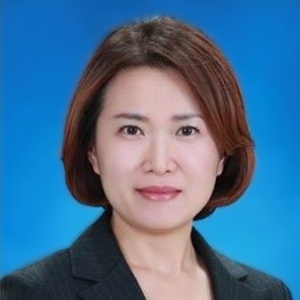
Jungsil Kim
Smart Bio-Industrial Mechanical Engineering, Kyungpook National University
Republic of Korea
|
Short Bio
Dr. Jungsil Kim is an assistant professor in the Department of Smart Bio-Industrial Mechanical Engineering at Kyungpook National University, Republic of Korea. She received her Ph.D. in Mechanical Engineering from Michigan State University, USA. Her expertise is in cardiovascular mechanics, and her research aims to evaluate and analyze cardiovascular tissues and systems from a mechanical perspective to improve our understanding of health and disease. She is interested in the development of biodevices and biomaterials to aid in the diagnosis, treatment, and prediction of disease or injury.
Doctoral Consortium Co-Chairs
Short Bio
Not Available

|
Vítor Carvalho
Applied Artificial Intelligence Laboratory, School of Technology - Polytechnic University of Cávado and Ave & Algoritmi Research Centre, School of Engineering - University of Minho
Portugal
|
Short Bio
Vítor Carvalho is an Associate Professor with Habilitation at the Polytechnic University of Cávado and Ave (UPCA), Portugal, and an integrated researcher at the Applied Artificial Intelligence Laboratory (2Ai). He received his PhD in Industrial Electronics in 2008 and his Habilitation in Electrical Engineering in 2024. His research focuses on artificial intelligence, biomedical instrumentation, wearable and intelligent healthcare systems, signal and data processing, and serious games. He has authored more than 200 scientific publications and has coordinated and participated in several national and international R
&D projects, particularly in digital health, wearable monitoring and applied AI. He served as Dean of IPCA's School of Technology from 2017 to 2025 and has participated in European Commission expert groups addressing AI, data and digital technologies.
... More >>
Short Bio
Hui Liu is a researcher focusing on biomedical engineering, human activity recognition (HAR), rehabilitation assistance, machine learning (ML), virtual reality, music information retrieval (MIR), and general application of artificial intelligence (AI) in multidisciplinary fields. He developed the first mobile system that senses and recognizes its users' movements in real-time, utilizing proximity wearable sensors integrated into a knee bandage (2019), and contributed Motion Units, a human activity modeling method with interpretability, generalizability, and expandability, rationalizing knowledge from kinesiology
and automatic speech recognition into HAR research (2021).
... More >>